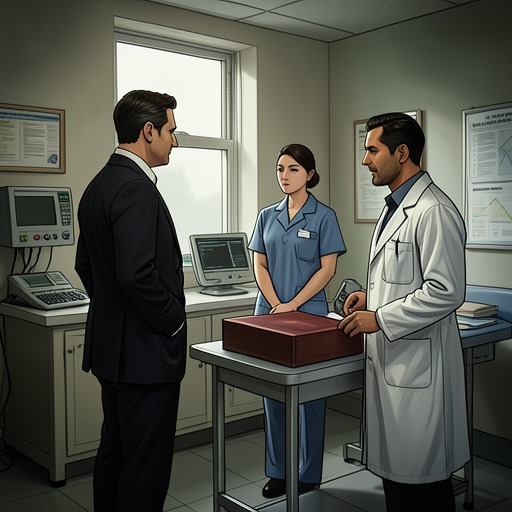
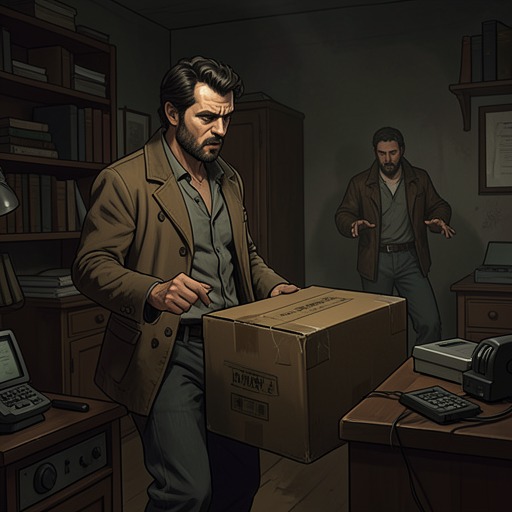
The relationship between the box-man narrator and the fake box man (the clinic doctor)
The Box ManThe relationship between the Narrator as a Box Man and the Doctor is built around an unstable exchange of roles: each has worn a box, each watches the other, and neither can keep the distinction between observer and observed secure. The Doctor first proposes a bargain that would let the Narrator live in the house while reserving for himself the right to watch. That offer makes their rivalry unusually intimate: the Doctor presents himself as harmless, even disposable, while insisting on a place within the Narrator’s private life. The bargain does not hold. Their shared history as Box Men becomes a source of insight, accusation, and ultimately armed conflict.
Unequal Positions and the Gaze
The Narrator’s account begins from the predicament of being watched while watching. When the Doctor’s box leans toward him and an eye appears at its window, the Narrator recognizes the maneuver as one he himself had modeled. The eye does not merely look; it makes the Narrator feel assigned the position of someone who is seen but cannot see in return. That reversal depresses him because his usual position as observer no longer protects him from becoming an object of another person’s attention. Their relationship therefore develops through a struggle over control of visibility, not simply through competing claims to occupy a box.
The Doctor’s proposed compromise turns that struggle into an explicit arrangement. He says he will leave the house to the Narrator and will neither interfere nor meddle in whatever relationship the Narrator establishes with the young woman there. In exchange, he asks to retain the freedom to watch from a corner, still wearing his box. He imagines that, once the others become accustomed to him, he will be no more noticeable than a wastebasket. The offer grants the Narrator practical freedom but denies him privacy: the Doctor would withdraw from active interference while remaining present as a witness.
The Narrator suspects that the proposal has a disturbing familiarity. He has the impression that the Doctor is performing an offer the Narrator himself had formulated. The apparent separation between them thus weakens even as they negotiate: the Doctor’s words seem to give shape to a desire already inside the Narrator. The young woman’s absorbed attention to a stringless cat’s cradle supplies a visible counterpoint to their exchange, but the scene does not establish her agreement to the men’s arrangement. Their bargain is made between the two Box Men, with her presence treated as part of the situation they are trying to control.
Shared Experience, Different Claims
The Doctor claims authority from experience: he says he has himself been a Box Man and therefore understands them better. In his account, people ignore Box Men because they do not know who is inside the box. He also claims to recognize the Narrator’s true character and says he dislikes being stared at. The claim is double-edged. The Doctor understands the social anonymity created by the box, yet he uses that understanding to assert that he can read the person concealed inside it. Shared experience gives him a language for criticizing the Narrator, but it does not produce trust or mutual acceptance.
The Narrator answers that he paid fifty thousand yen, while admitting that he has grown accustomed to looking without becoming accustomed to being looked at. The exchange makes their difference concrete: the Narrator describes a continuing discomfort with reciprocal visibility, whereas the Doctor treats his experience as grounds for interpreting and testing him. The Doctor’s box also marks him as an imitation in the Narrator’s eyes. When he bends and rises, the dry cardboard rubs against the wall; the Narrator contrasts it with a genuine box that has been used for a long time. This judgment is not just about materials. It sets the Doctor’s claimed kinship against the Narrator’s suspicion that the Doctor’s version of box life is counterfeit.
That distinction exists in a world where Box Men can be present and still escape public recognition. The account of a vagrant found dead in the Shinjuku Station underpass describes a man overlooked for hours amid commuters, although the evidence does not identify him as a Box Man. The episode offers a separate instance of public inattention, not proof that the Doctor or Narrator shared that man’s circumstances. Against this wider pattern, the two men’s intense attention to one another is a pointed reversal: inside their private contest, neither can remain unseen.
From Bargain to Armed Contest
The Doctor’s promise of noninterference proves incompatible with the confrontation that follows. The Narrator describes photographic evidence connecting the person who shot him with the Doctor, identifying the figure in the image by details of his clothing and appearance. As the Narrator presses the identification, the Doctor’s box begins to shake and an air rifle emerges through its observation window, aimed at the Narrator. Whatever distance the proposed bargain had maintained between them collapses: the concealed watcher becomes an armed participant, and the Narrator’s suspicion becomes an immediate physical danger.
The Narrator counters with the sand-filled crocodile toy he had prepared as a weapon. He strikes the rifle barrel, wrests the gun away, and uses the toy to force the Doctor to withdraw his arm into the box. The Doctor then curls up and becomes passive. The encounter reverses their earlier arrangement of watcher and watched once more: the Doctor had proposed watching from a corner, but now his box is the object the Narrator faces and acts upon. The box that once enabled concealment cannot prevent its occupant from being drawn into the conflict.
Significance and Limits
The relationship does not resolve into a stable distinction between a genuine Narrator and a false Doctor. The Narrator’s judgment that the Doctor’s box is inferior is clear, as is the Doctor’s attempt to use prior experience to claim insight into the Narrator. Yet both men occupy the same basic predicament: the box conceals the person within while making the wearer conspicuous as a suspicious presence. Their history makes the Doctor’s proposal plausible, and their different claims to authenticity make it untenable.
Their conflict also exposes the cost of treating visibility as a privilege one can grant or withhold. The Doctor offers to leave the Narrator alone only on condition that he may continue watching; the Narrator, who has long depended on looking, resists being placed under that gaze. Once the Doctor reaches for the rifle, their disagreement is no longer contained by observation or negotiation. The relationship’s decisive movement is from a proposed coexistence founded on surveillance to open confrontation, without evidence that either man has settled the question of what it means to be a Box Man.